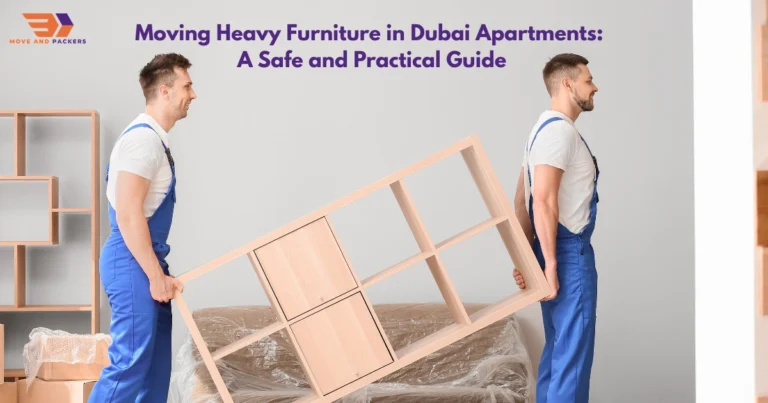

Moving a sofa, wardrobe, bed, dining table or cabinet through a Dubai apartment is rarely as simple as carrying it from one room to another. Narrow doors, tight corridors, shared elevators and building access rules can quickly turn a straightforward move into a difficult job.
If you are wondering how to move heavy furniture in an apartment without damaging the furniture, walls, flooring, or yourself, preparation is the most important step. Accurate measurements, proper dismantling, suitable protective materials, and the right moving equipment can make moving heavy furniture far safer and more manageable, especially in Dubai high-rise buildings.
Why Is Moving Heavy Furniture in a Dubai Apartment Difficult?
Dubai apartments can present challenges that do not always appear in general moving advice.
Large sofas, king-size beds, wardrobes and dining tables may need to pass through narrow entrances, sharp hallway turns and limited elevator openings. High-rise buildings can also have designated moving hours, service-lift requirements or specific access procedures.
Property protection is another consideration. Marble or tiled floors, painted walls, door frames and elevator interiors can easily be scratched or marked when oversized furniture is handled incorrectly.
Recognizing these challenges before moving day helps reduce delays, property damage and last-minute problems.
Measure the Furniture, Doors and Service Elevator First
Before moving large furniture, measure every part of the access route.
Record the height, width and depth of each furniture item. Then measure:
- Apartment entrance doors
- Internal doorways
- Corridors
- Stairways
- Elevator doors
- Elevator interiors
- Turning spaces
- Destination room entrances
A sofa may fit through a doorway when positioned straight but still be impossible to rotate around a narrow hallway corner.
Measurements to Check Before Moving
| Check | Why It Matters |
| Furniture width | Determines door clearance |
| Furniture height | Helps check lift and doorway clearance |
| Furniture depth | Affects turning space |
| Door opening | Determines safe entry and exit |
| Corridor width | Shows whether furniture can rotate |
| Lift door width | Determines whether the item can enter |
| Lift dimensions | Confirms whether the furniture fits inside |
In many Dubai towers, a designated service elevator may provide more suitable access for bulky furniture than a passenger elevator. Confirm which lift building management allows movers to use before the move.
Check Building Moving Rules Before Moving Large Furniture
Many Dubai residential buildings have specific procedures for moves, deliveries and service-elevator access.
Depending on the building, residents may need to arrange approval, reserve a moving time slot or notify security before movers arrive.
Checking the Dubai moving permit requirements in advance can help prevent unnecessary delays, particularly when building management controls service-lift access or moving hours.
Do this before confirming the moving schedule rather than discovering access restrictions after the moving team arrives.
Dismantle Large Furniture When Possible
Furniture dismantling can make oversized items smaller, lighter and easier to move through apartment doors and corridors.
It can also reduce the risk of damaging furniture joints, walls and door frames.
Beds
Separate the mattress, headboard and bed frame where the design allows.
Wardrobes
Empty the wardrobe first. Remove loose shelves, drawers and detachable doors before deciding whether the main structure needs dismantling.
Sofas
Remove detachable legs, cushions and modular sections. Sectional sofas are generally easier to transport when separated into individual pieces.
Dining Tables
Where appropriate, removable legs or detachable sections can reduce the overall size of the table.
Furniture dismantling and reassembly in Dubai can be particularly useful for modular wardrobes, large beds and sectional sofas. Complex furniture should not be forced apart because incorrect dismantling can damage fittings or weaken the structure.
Protect Furniture, Floors and Walls Before Moving
Protection should begin before furniture leaves the room.
Depending on the furniture material and design, movers may use:
- Moving blankets
- Protective padding
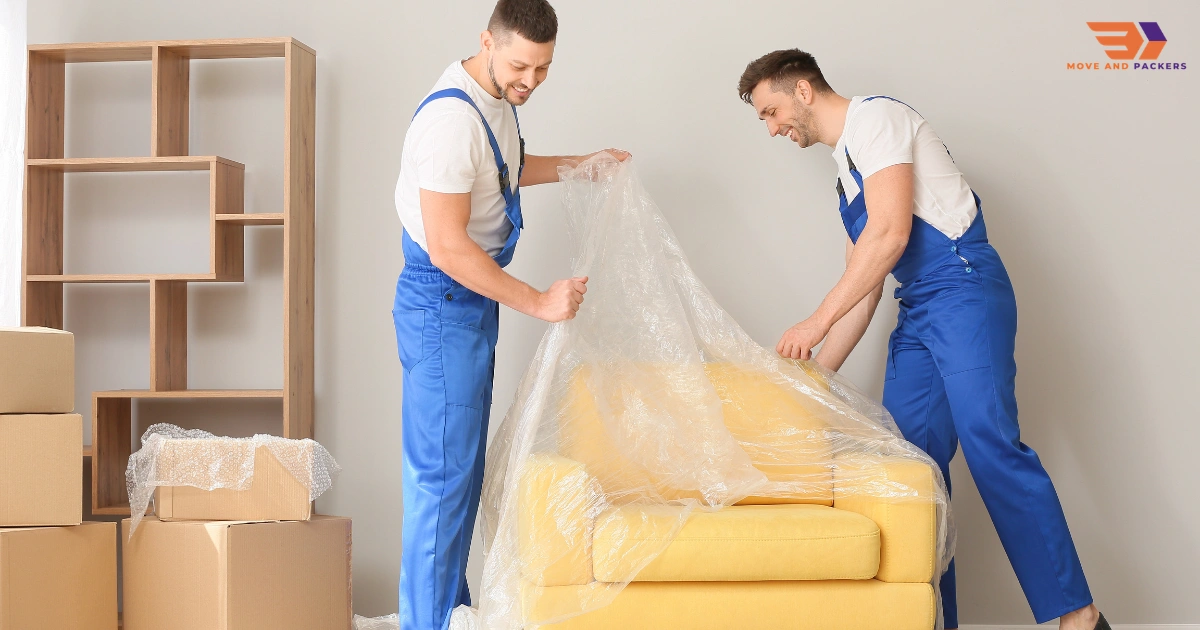
- Stretch wrap
- Corner guards
- Furniture covers
- Floor protection
- Door-frame padding
Special attention should be given to polished wood, glass, marble, mirrors and furniture with exposed corners.
Protect the moving route as well as the item itself. Floors, corridor walls and entrance frames can be damaged when heavy furniture is rotated through tight spaces.
For broader household preparation, the packing and unpacking guide explains how other belongings can be prepared before relocation.
Use the Right Equipment for Heavy Furniture
Trying to manually carry an oversized wardrobe, sofa, or cabinet without suitable equipment increases the risk of injury and accidental damage.
Depending on the item and access conditions, professional movers may use:
- Furniture dollies
- Moving trolleys
- Furniture sliders
- Moving straps
- Protective blankets
- Suitable lifting or handling aids
Mechanical assistance can reduce unnecessary manual lifting and improve control when moving awkward items.
Heavy furniture should never be dragged directly across marble, tile or wooden flooring.
What If the Sofa or Furniture Does Not Fit in the Lift?
This is one of the most common problems when moving large furniture in a high-rise apartment.
If a sofa, wardrobe, or bed frame does not appear to fit inside the elevator, follow a logical process rather than forcing the item.
First, recheck the measurements of both the furniture and lift opening. Even a small measurement error can affect whether an oversized sofa fits.
Next, check whether the furniture has removable:
- Legs
- Arms
- Cushions
- Shelves
- Drawers
- Panels
- Modular sections
If removing these components does not solve the problem, determine whether professional dismantling is possible.
You can also ask building management whether another approved access route or larger service elevator is available.
When an item remains too large, professional assessment is safer than improvising. Avoid makeshift balcony hoisting, ropes, or uncontrolled lifting methods. Oversized furniture may require specialist handling equipment and trained professionals.
How Different Types of Heavy Furniture Should Be Handled
Different furniture requires different preparation.
Sofas
Remove detachable sections and legs where possible. Protect upholstery, corners and exposed frames before moving through narrow doors.
For unusually large sectional furniture, experienced sofa movers in Dubai may first assess the doorway, corridor turns and elevator dimensions before deciding how the sofa should be moved.
Wardrobes
Empty all contents before moving. Remove drawers, shelves and detachable sections to reduce weight.
Large modular wardrobes may need dismantling and reassembly rather than being transported as one complete unit.
Beds
Move the mattress separately and dismantle the frame where appropriate. Headboards, especially large upholstered designs, should also be protected carefully.
Glass Dining Tables
Glass furniture needs additional attention because edges and surfaces can be vulnerable during handling.
Protect glass components properly and avoid treating a large glass table like standard wooden furniture. Specialist handling may be appropriate for large, expensive, or unusually shaped pieces.
Moving a Single Heavy Furniture Item in Dubai
Not every furniture move involves relocating an entire apartment.
You may only need to move:
- One sofa
- A wardrobe
- A bed
- A dining table
- A cabinet
- Furniture purchased second-hand
Single-item furniture moving still requires careful planning, particularly when the item needs dismantling, has to pass through a high-rise service elevator, or is being delivered to an apartment with restricted access.
For these situations, apartment furniture movers in Dubai can assess the item, pickup location, destination access, and dismantling requirements without treating the job as a complete household relocation.
DIY vs Professional Heavy Furniture Movers
| Factor | DIY | Professional Movers |
| Small/light furniture | Usually manageable | Optional |
| Large wardrobe | Difficult | Recommended |
| Oversized sofa | Difficult | Recommended |
| Dismantling | Depends on experience | Can be arranged |
| Moving equipment | Often limited | Specialist equipment available |
| High-rise access | Can be complicated | Easier to coordinate |
| Valuable furniture | Higher handling risk | Professional handling preferred |
DIY moving may work for small, lightweight pieces, but heavy or awkward furniture presents greater handling risks.
When Should You Hire Professional Furniture Movers in Dubai?
Professional furniture movers are worth considering when:
- Furniture is particularly large or heavy
- Dismantling and reassembly are required
- The apartment has narrow corridors
- Lift access is limited
- Stairs are involved
- Furniture is fragile or valuable
- Several heavy pieces need to be moved
- The item does not easily fit through a doorway or elevator
Professional heavy furniture movers in Dubai typically have the equipment and practical experience needed to coordinate complex apartment access while reducing unnecessary handling risks.
For oversized sofas, wardrobes and similar pieces, this can be more practical than attempting a difficult DIY move.
Final Heavy Furniture Moving Checklist
Before moving day:
- Measure every large furniture item
- Measure doors and corridors
- Check elevator dimensions
- Confirm building access requirements
- Reserve the service lift if required
- Empty drawers, cabinets and wardrobes
- Identify furniture that needs dismantling
- Remove detachable components
- Protect furniture surfaces
- Protect floors and door frames
- Clear the complete moving route
- Prepare suitable moving equipment
- Confirm measurements at the destination
A few extra minutes spent checking these details can prevent much larger problems during the move.
Summary
Moving heavy furniture in a Dubai apartment is much easier when the process is planned around measurements, building access, dismantling, surface protection and appropriate equipment.
The most important rule is not to force oversized furniture through spaces that are too small. Measure first, dismantle where suitable and get professional assistance when the size, weight or access conditions make the move difficult.
For oversized sofas, wardrobes, beds and other challenging items, Move & Packers can provide professional furniture moving support in Dubai, including careful dismantling, protective packing, transportation and reassembly.
FAQs
How do you move heavy furniture in an apartment?
Measure the furniture, doors, corridors and elevator first. Remove detachable components, protect furniture and property surfaces, clear the moving route and use suitable handling equipment instead of relying only on manual lifting.
Do furniture movers dismantle wardrobes and beds?
Many professional furniture movers can dismantle wardrobes, beds, sectional sofas and similar furniture when required. They may also reassemble the furniture after it reaches the destination.
What should I do if my sofa does not fit in the elevator?
Recheck the measurements, remove detachable components, and determine whether the sofa can be safely dismantled. If it still does not fit, ask building management about approved alternative access and arrange a professional assessment rather than attempting unsafe lifting methods.
How do movers protect furniture and floors from damage?
Depending on the item, movers may use moving blankets, protective padding, stretch wrap, corner protection, and floor coverings. Door frames and tight hallway corners may also need protection.
When should I hire heavy furniture movers in Dubai?
Professional movers are particularly useful for oversized furniture, items requiring dismantling, valuable pieces, difficult elevator access, narrow corridors, staircases, or moves involving several heavy items.